
Request A Demo

Thank you! Your submission has been received!
Oops! Something went wrong while submitting the form.

I spent many years working in project controls as a planning engineer, a role that gave me a unique, high-level view of project execution. While site engineers, quality engineers, and procurement engineers were focused on their day-to-day responsibilities, my role naturally allowed me to step back from the operational details and observe how work flowed across different departments. This broader perspective helped me identify recurring patterns, communication gaps, and inefficiencies that are often difficult to see from within a single function.
Ask a contractor why they haven't invested in digital transformation, and you'll often hear a response like this:
“Software is expensive. Our profit margins are already tight. We're constantly looking for ways to reduce costs, not add new ones. Competition is intense, so every dollar matters if we want to win projects and remain profitable.”
From an accounting perspective, they're right. The contractor pays for software licenses, implementation, training, mobile devices, and ongoing support. These appear as new expenses on the financial statements.
But economically, something very different is happening. The software isn't creating an additional cost for the business. It is an investment that simply changes where the project's money goes. Instead of asking, "How much will digital transformation cost?" we should be asking, "Who is currently receiving the money that digital transformation could save?" Understanding this distinction changes how we evaluate every technology investment.

Throughout history, successful innovations rarely created wealth from nothing. Instead, they reallocated existing spending toward more productive activities. Consider Toyota's reputation for reliability. Building highly reliable vehicles requires significant upfront investment in research and development, engineering, testing, manufacturing processes, and higher-quality components. At first glance, this appears to increase the manufacturer's costs. However, much of that investment is recovered by reducing warranty claims, recalls, manufacturing defects, rework, quality failures, while strengthening customer trust and long-term loyalty. Customers also benefit through fewer breakdowns, lower maintenance costs, better fuel efficiency, and less downtime over the life of the vehicle. As a result, Toyota built one of the world's most trusted automotive brands. Its reputation for reliability drove customer loyalty, repeat purchases, and word-of-mouth referrals, reducing marketing costs while increasing sales. Rather than creating an additional cost, Toyota reallocates spending from fixing problems after production to preventing them in the first place—creating value for both the manufacturer and the customer. This is how progress has always been made—by investing in better ways of doing things and shifting resources away from inefficiency. Every major innovation improves lives not by creating more work, but by eliminating waste and creating more value for everyone involved.
Construction projects already spend enormous amounts of money dealing with inefficiency because projects are becoming incredibly complex.
- Hundreds of people.
- Thousands of activities.
- Multiple subcontractors.
- Constant design changes.
- Thousands of daily decisions.
Without structured digital systems, small problems quickly become expensive ones.

Think about where project money quietly disappears every day:
- Waiting for information
- Searching for documents
- Loss of productivity onsite
- Following up on unresolved issues
- Recreating reports
- Manual data entry
- Rework
- Delayed decisions
- Poor communication between departments
- Lost productivity during meetings
- Schedule delays caused by late issue resolution
- Claims resulting from incomplete records
- Rising disputes
- Inefficient use of the team’s time, attention and energy
- High printing costs as many tasks are processed manually on paper.
- Team’s burnout caused by constant interruptions
- Chaotic environments and lack of systems
- Absence of proper issue tracking
- Lack of structured data
- Inefficient data storage and accessibility
None of these costs appear as a line item called "inefficiency." They are spread across labour, overhead, subcontractors, equipment, management time, and project delays. That makes them easy to underestimate.

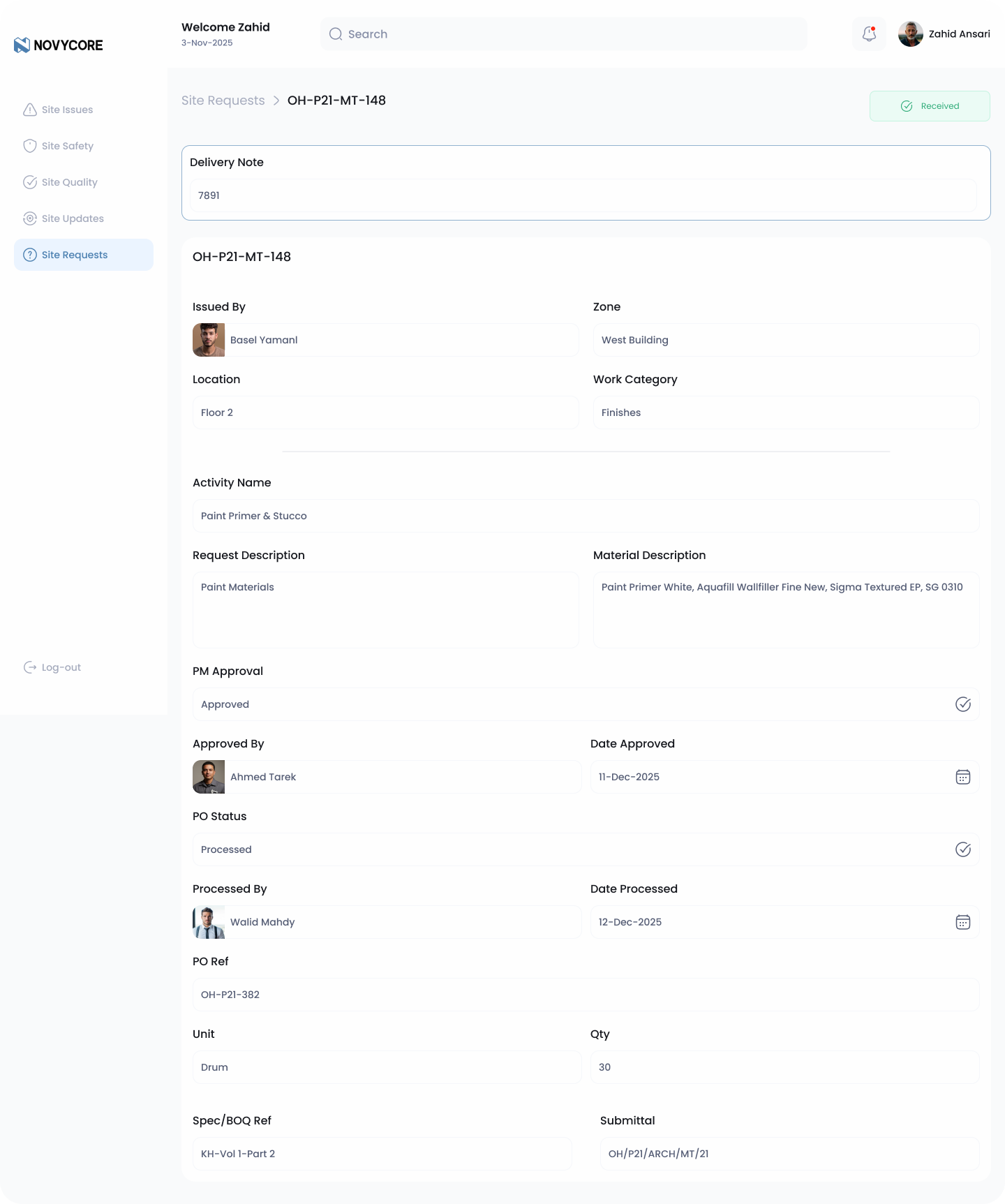
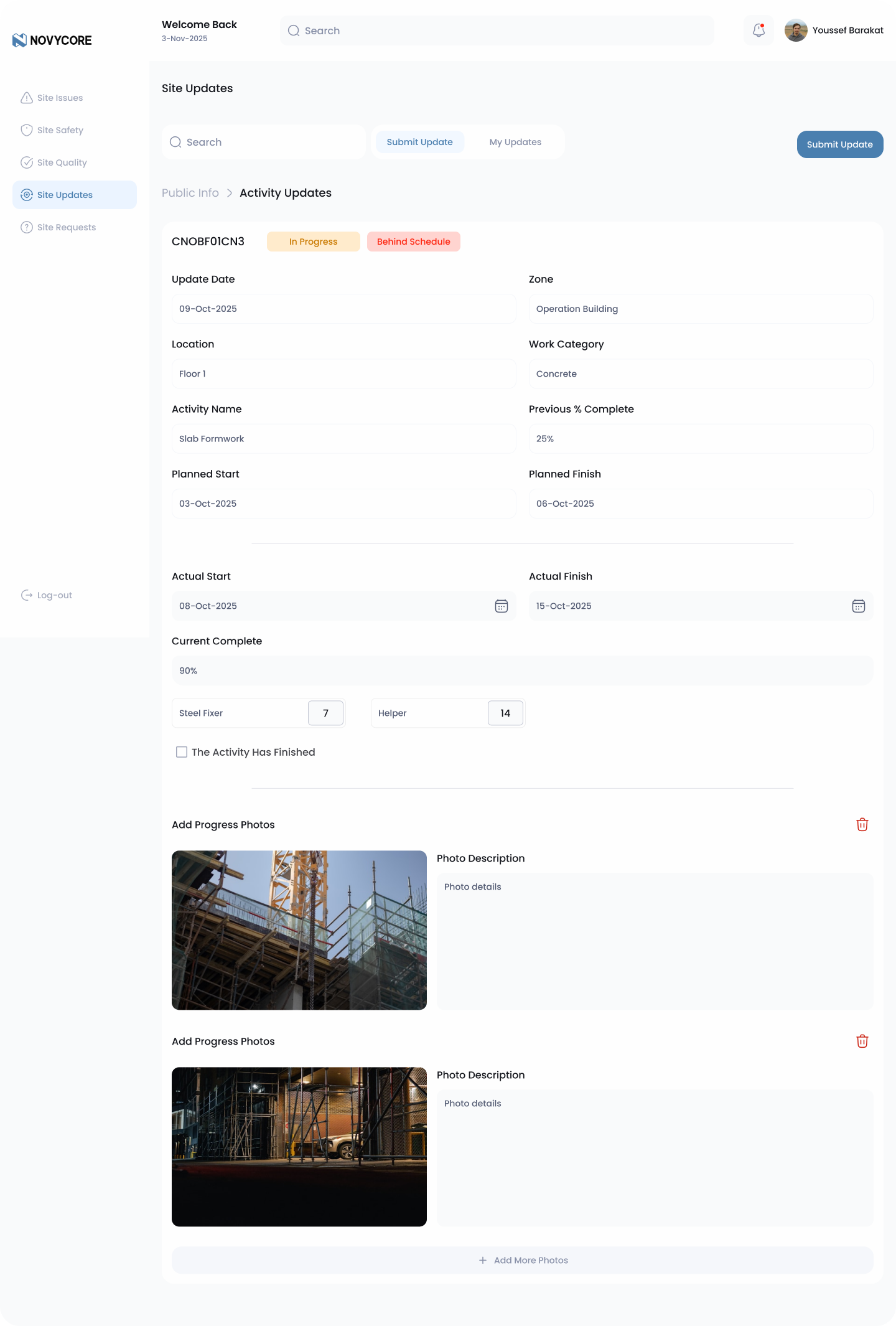
Imagine a contractor invests in a digital platform for managing site issues, quality inspections, safety observations, progress updates, documents, budget, procurement, requests and analytics. The accounting department records a new software expense. But economically, where does that money actually come from?
Perhaps:
· Two fewer site engineers are required to follow up each field task manually.
· Weekly reporting takes minutes instead of several hours.
· Project managers spend less time searching for information.
· Site teams close issues days earlier.
· Rework is reduced because defects are identified immediately.
· Delay claims become easier to defend through complete history of digital records with time stamps.
· Managers spend less time coordinating through lengthy daily meetings because information is already visible to everyone.
· Printing costs are significantly reduced as workflows move from paper to digital platforms.
· Contractors pay less on claims specialists and legal advisers whose work arises from missing records and disputes.
· The company uses one integrated platform instead of using multiple isolated software tools.
· The team benefits from greater autonomy, improved clarity, and less operational chaos.
· Engineers can focus on solving problems instead of managing paperwork.
The software is not creating a new cost. It is replacing many existing costs that were previously accepted as "normal." The project budget simply shifts from administrative waste toward productive capability. One challenge with digital transformation is that many benefits never appear directly in financial reports. These improvements are difficult to isolate individually. This is why many organizations underestimate the return on digital transformation. They compare the software cost with obvious savings while ignoring the hidden costs that disappear over time.

The value of digital transformation extends far beyond reducing costs or increasing productivity. More efficient project delivery means buildings, schools, hospitals, factories, and infrastructure become operational sooner, allowing communities and businesses to benefit earlier. The impact is ultimately felt by people. Children can start attending their new neighborhood school months earlier instead of enduring long daily commutes, while families can move into homes closer to work sooner—saving hours in traffic each week and spending more time with the people who matter most.
Better coordination and real-time visibility also reduce rework and material waste, contributing to more sustainable construction. At the same time, structured digital workflows strengthen communication, accountability, and decision-making while supporting employee well-being. Teams can work with greater clarity, less chaos, lower stress, and a stronger focus on quality and safety.

Construction has always delivered successful projects, even before digital transformation. The difference is not whether projects can be completed, but how efficiently they are delivered. Every unnecessary delay, manual process, repeated inspection, or coordination issue consumes time, money, and human effort that could be invested elsewhere. By reducing these hidden inefficiencies, digital transformation enables contractors to reinvest resources into innovation, employee development, new projects, and long-term growth. Progress is not simply about finishing projects—it is about delivering better outcomes with fewer resources, creating more value for clients, businesses, and society alike.
